
BIO-JUST Brazil - BIOdiversity and ecosystem protection driven by Environmental JUSTice
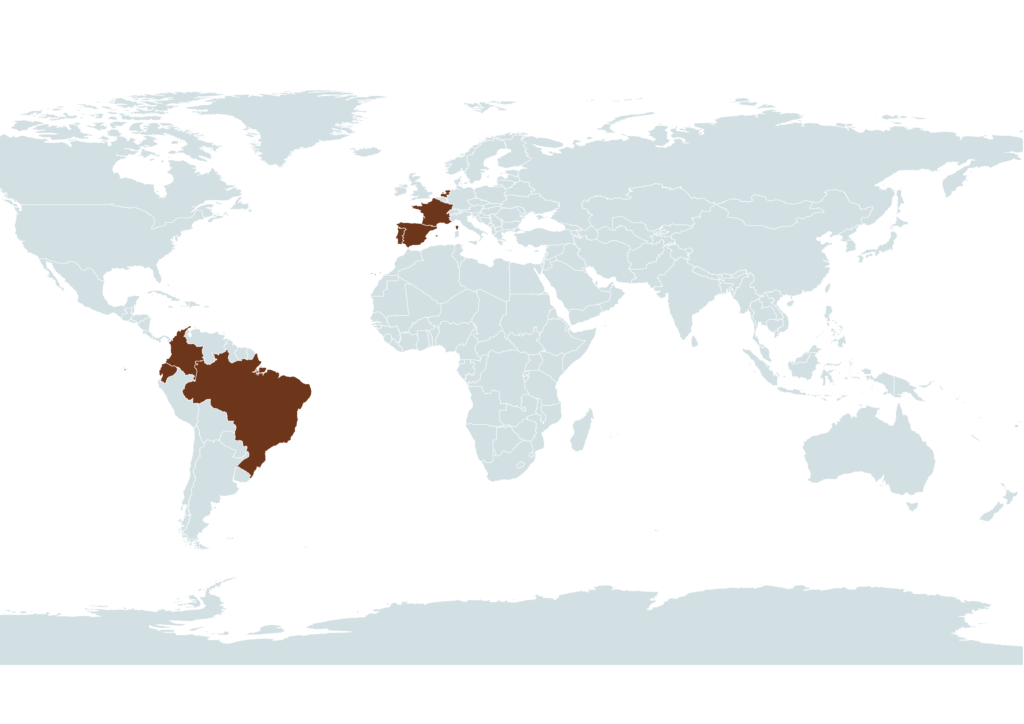
The BIO-JUST project investigates the implications of environmental justice in the design, implementation, and evaluation of Nature-Based Solutions (NbS) for watershed provisioning of ecosystem services in seven different case studies in Europe (Spain, France, The Netherlands and Portugal) and Latin America (Brazil, Colombia and Ecuador). It brings together perspectives from environmental justice, political ecology, environmental anthropology, critical institutional analysis and ecological economics in a multidisciplinary approach to question which types of NbS, under which conditions, generate or reinforce inequalities and conflicts, and which promote socially just outcomes while simultaneously promoting biodiversity conservation and water security. The novelty of the project lies in the qualitative, quantitative, integrated and participatory evaluation of the implications of environmental justice and the conservation impacts of various NbS for ecosystem services in areas that are biodiversity hotspots, pioneering countries in NbS implementation, or located in particularly water-scarce areas, but which diverge in terms of institutional configuration, management entity, age, size, biophysical context, and therefore offer the necessary variety to deliver robust comparative results.
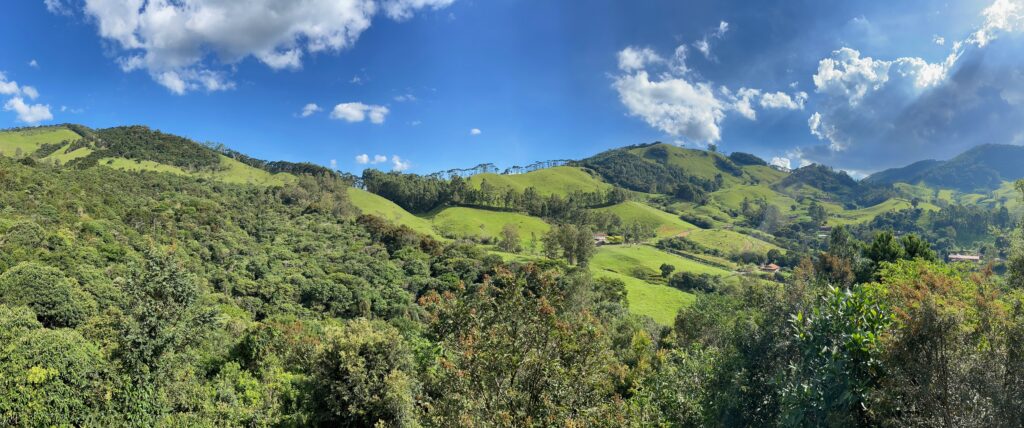
The Brazilian team will conduct the case study in the municipality of Extrema (MG). Strategically located, Extrema is the southernmost city in Minas Gerais, being the first municipality in Minas Gerais for those leaving the state of São Paulo via the Fernão Dias highway (BR-381), which connects the capitals São Paulo and Belo Horizonte. According to the 2022 Census, Extrema has 53,482 inhabitants and a territorial area of 244.575 km², of which 26.76 km² is urbanized. In 2005, the Water Conservation Project was implemented through Municipal Law No. 2,100, a pioneering Payment for Environmental Services (PES) initiative aimed at increasing forest cover, implementing ecological corridors and improving water availability and quality. This project inspired the Mantiqueira Conservation Plan initiated in 2016 and subsequently the Extrema no Clima Program in 2018. BIO-JUST’s insights into the impacts on livelihoods from an environmental justice perspective can directly inform the ongoing processes of these projects in Extrema and guide them towards more equitable outcomes.
Funding:
Biodiversa+ European Biodiversity Partnership supporting excellence in biodiversity research with social and political impacts – CNPq
Execution period:
April 2023 to April 2026
Contact:
biojustufabc@gmail.com
Vanessa Lucena Empinotti (coordinator) –v.empinotti@ufabc.edu.br
Thais Tartalha do Nascimento Lombardi – thais.tartalha@ufabc.edu.br
Carolina Simões Galvanese – carolina.galvanese@ufabc.edu.br
Mariana Mencio – mariana.mencio@ufabc.edu.br
Bruno Peregrina Puga – bppuga@gmail.com
Gabriel Alves da Silva Junior – gabriel.junior@ufabc.edu.br
Luana Braz Villanova – luanab.villanova@gmail.com
Karina Gonçalves de Almeida – k.almeida@ufabc.edu.br
Natan Massala Souza dos Santos – natanmassalaic@gmail.com
Raquel Henrique – kellhenrique@gmail.com
Renata Pereira Sarti – renata.sarti@aluno.ufabc.edu.br
Stéfany Ferreira de Lima – stefany.lima@aluno.ufabc.edu.br
Veridiana Emilia Godoy – veridiana.e.godoy@gmail.com
Yohana Campos da Rocha – yohana.campos@aluno.ufabc.edu.br
German Institute of Development and Sustainability, in Germany;
Danone WATERS – Water Institute by Evian and French Geological Survey (BRGM), in France;
University of Lisbon and WWF, in Portugal;
University of La Laguna, in Spain;
Wageningen University and Research, in The Netherlands.
- Presentation at the XIX World Water Congress, 2025.
- Article presented at the 11th Meeting of the Rural Studies Network, 2025. Access here.
- Participation in the Political Ecology Network – POLLEN, 2024